
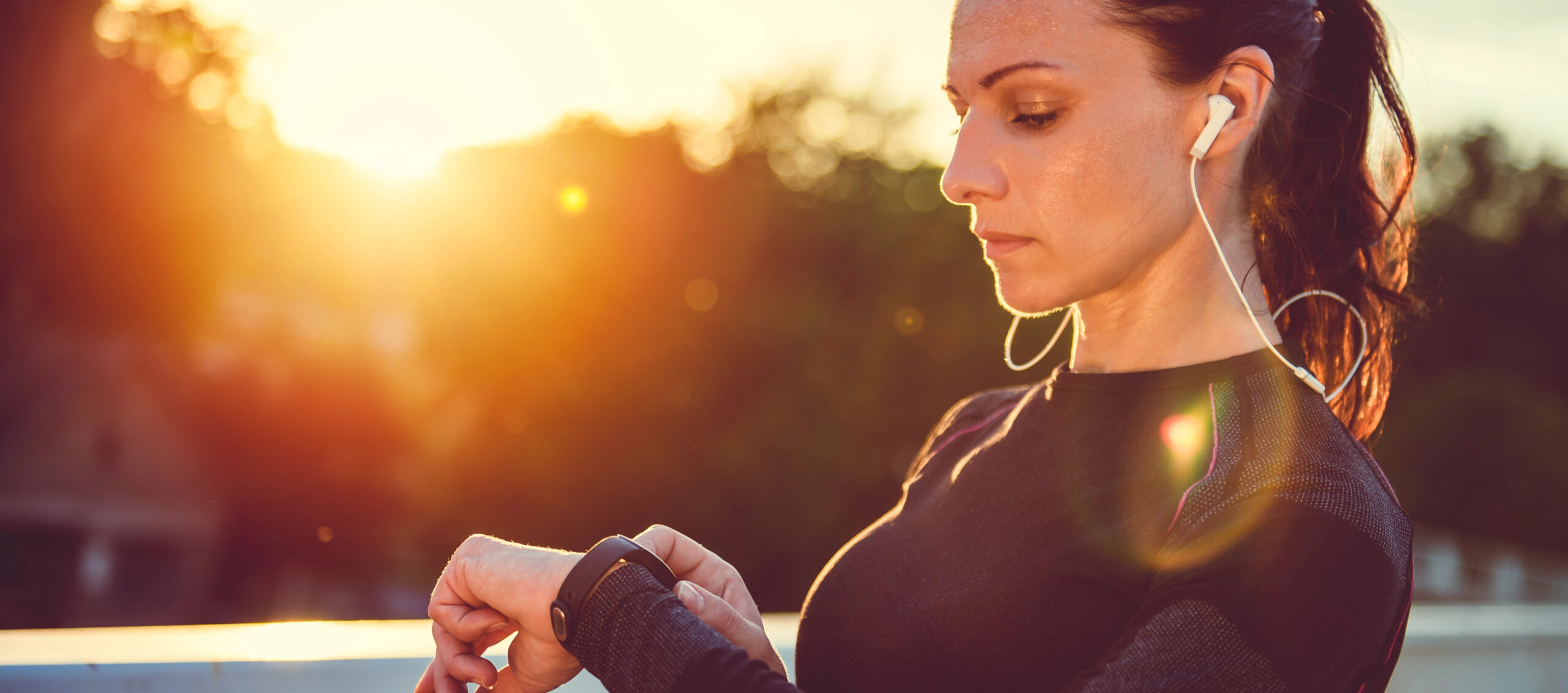
Trying to take care of yourself should not feel like a job. But lately, for a lot of us, it does.
There is a number for your sleep, your steps, your recovery, your readiness, your protein, your water. Each one is supposed to help. Stacked together they start to feel like a performance review you never signed up for, and one where you are always coming up a little short.
If you have ever closed a sleep app feeling worse than before you opened it, this one is for you.
You Are Not Imagining It
This year the Global Wellness Summit named the over-optimization backlash one of the biggest shifts happening in wellness. People are worn out on tracking and hacking every measurable thing about themselves.
A lot of people quietly stop wearing them after a few months.
There is even a word for the sleep version. Clinicians call it orthosomnia, which is anxiety about sleep caused by monitoring your sleep. You get a bad score, you worry about the score, you sleep worse. The tool creates the very problem it promised to fix.
None of this means data is bad. Some people genuinely feel steadier with a little structure. The trouble starts when the measuring becomes the point, and your body turns into something to manage instead of something to listen to.
A FREE RESOURCE
A Gentler Next Step
I Know This One From the Inside
I do not wear the ring. No sleep tracker, no daily step count, none of it.
When friends tell me why they love theirs, I get it. They can see patterns in their sleep, their eating, their drinking, and that information genuinely helps them. I am not against data.
But I know myself. Years ago, when I was on an exercise program, I could not leave the house without my watch. If a workout did not get logged, it may as well not have happened. My trainer used to joke that it does not count if you do not track it. We would laugh, and then I would stand there afterward staring at a calorie number that was always so much lower than it had any right to be. All that effort, and the watch shrugged.
That is the moment tracking stopped being information for me and started being a scoreboard.
So when I read that the culture is finally pushing back on all this, I felt something like relief.
Why This Hits Hardest If You Are Already Trying
The people I work with are not lazy. Usually the opposite. They are the capable ones, the ones everyone leans on. They read the article, they bought the app, they are doing the breathing exercise in the parking lot before pickup.
Which is exactly why this gets them. If you have always been rewarded for effort, then rest becomes one more thing to be good at. You do not just want to rest, you want to rest well.
Am I recovering enough? Is this the right kind of rest? Why is my score still low when I did everything right?
And when the number comes back low anyway, most people do not blame the number. They blame themselves.
If that’s a familiar loop, book a free 15-minute consultation to talk about untangling it. No pressure, just a conversation.
Here Is the Part I Wish More People Knew
There Is Also the Question of What You Stop Learning
Here is the part that bothers me most as a somatic therapist.
Tracking moves your reference point from inside you to outside you. Instead of asking yourself how you feel, you check what the device says. Carl Rogers had a name for this. He called it the locus of evaluation, and a good deal of therapy is helping someone move theirs from external back to internal. From what does everyone else think, to what do I think. The trackers quietly run that in reverse.
A number also only means something as a trajectory. Am I on pace, is this better than last week, will I hit it by Friday. So you end up grading the past or projecting into the future. Rarely just here.
And then there is what you stop practicing. Noticing your own body is a skill, and skills need reps. If the watch tells you when you are tired, you get less practice at feeling tired. It reminds me a little of the conversation happening about AI right now. Lean on it for everything and you might notice some of your own thinking has gone quiet. Same principle, different tool.
I want to be fair here. Short term, this data can be genuinely useful. A sleep study for a few nights, or wearing something for a couple of weeks to catch a real pattern like a blood pressure spike, gives you information you could not get on your own. It is the years-long version I wonder about. The one where you stop checking in with yourself because something on your wrist already answered.
Your body is not a machine reporting to you from a distance. It is where you live.
A Few Things to Try Instead
- Unplug one thing — Pick one metric you have been tracking and stop tracking it for two weeks. Just one. Notice what happens to your mood, not your numbers.
- Check in before you check the app — Before you look at the score, ask yourself how you actually feel. Rested? Heavy? Fine? Answer first, then look if you still want to. You are practicing trusting your own read.
- Let something stay unmeasured — A walk with no watch. A stretch with no count. A swim where nobody knows the distance. Let one restorative thing belong only to you.
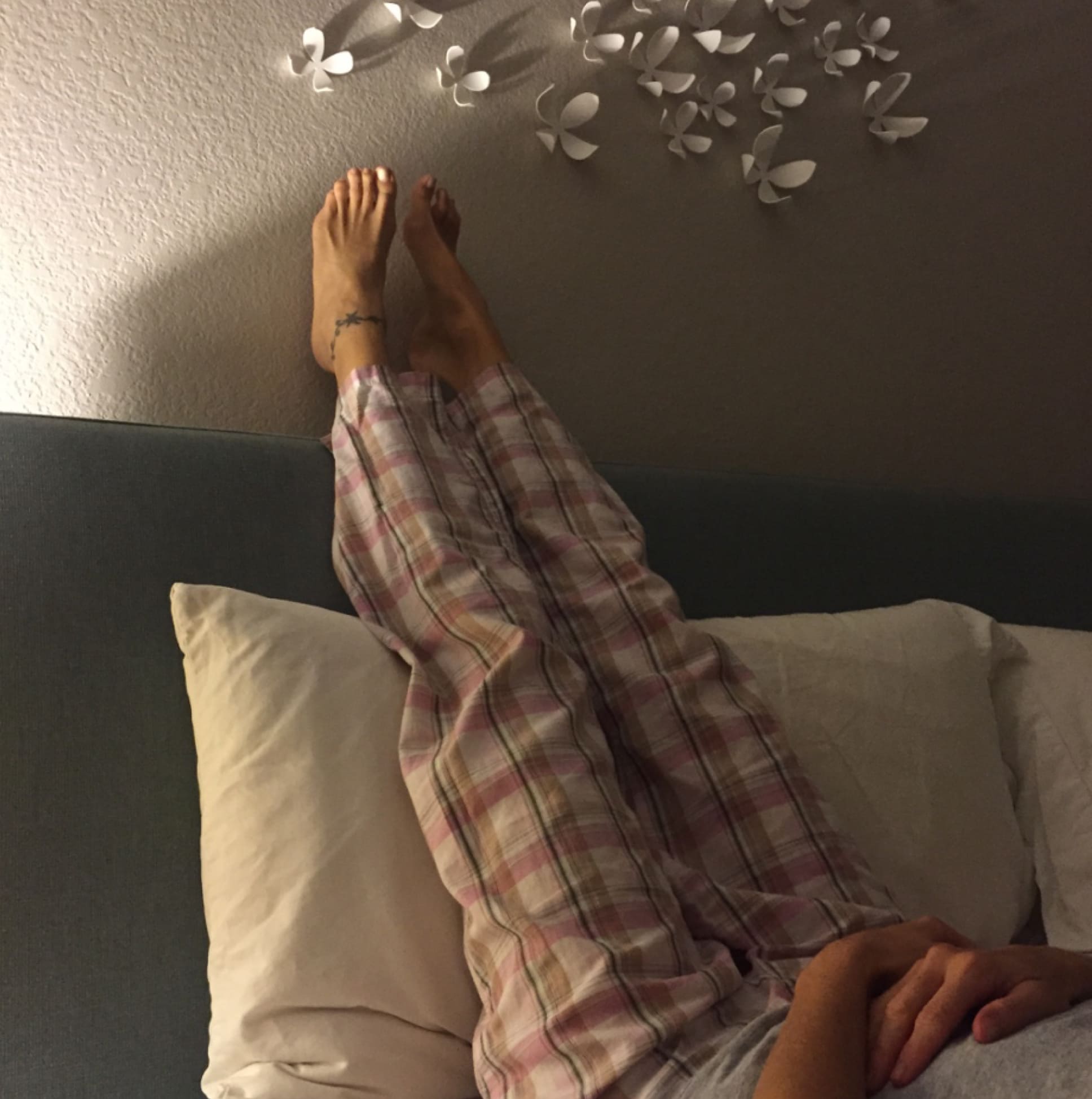
- Legs up the wall — Five minutes, phone in another room. Lie on your back with your legs resting up a wall. It asks nothing of you and it gives your system a clear signal that the day can pause. More nervous-system-regulation exercises like this here.
- Change the question — Instead of asking what would be optimal today, try asking what would feel good today. They are rarely the same answer, and your body knows the difference.
You Do Not Have to Earn Your Rest
Rest is not a reward for productivity. You do not have to perform your way into deserving it. If there is a part of you that believes otherwise, that stopping means falling behind, you might try saying something to her directly.
We are not being graded right now. You can put it down.
I do not do this perfectly either. But I notice it faster than I used to, and noticing is most of the work.
I hope one of these helps you take a little pressure off. Even one unmeasured hour is a start.