

The IFS Model: Understanding How Parts Work in Therapy
IFS therapy is often referred to as “Parts Work”. At its core, it’s simple: we all have different parts of us. And one of the most healing things we can do is to learn how to relate to them differently. Not by pushing them away, but by getting to know them. Listening. Understanding. The way we might with someone we care about.
Think about the last time you felt conflicted. Maybe one part of you wanted to speak up in a meeting while another part told you to stay quiet and safe. Or perhaps at 10pm, one part pushed you to finish just one more task while another part begged for rest.
If you’ve seen the movie Inside Out, you already have a sense of how IFS works. Different emotional parts show up at different times, each with their own perspective and role in your life.
In internal family systems, these parts are like sub-personalities—they carry their own beliefs, emotions, and protective functions. None of them are bad. They’re all trying to help you, even when their strategies create problems in your daily life.
The IFS model identifies three main categories of parts:
- Managers work hard to keep everything under control. They plan, organize, and try to prevent anything painful from happening. This is the perfectionist, over-functioning part that feels responsible for keeping everything together. Think of that mindset that likes to make lists, double-check work, arrive early, and struggle to delegate or rest—that’s a Manager part doing its job.Underneath its drive lies fear—fear that if it stops, things will fall apart. Fear of being judged, criticized, or seen as failing. This manager part often developed in response to a critical parent or chaotic family environment where someone needed to be the responsible one.
- Firefighters jump into action when painful emotions threaten to overwhelm you. They distract and numb you through behaviors like scrolling your phone, binge eating, substance use, or other quick fixes. Their goal is immediate relief, not long-term solutions.
- Exiles are the wounded parts that carry childhood trauma, bad memories and beliefs. They’re often vulnerable parts of the psyche that carry extreme emotions like hurt, shame, fear, or unworthiness, often stemming from painful experiences or neglect. Maybe there’s a 7-year-old part that felt invisible at home, or a teenage part that learned to shrink to stay safe. Managers and firefighters work overtime to protect or “exile” those parts, trying to keep the bad memories out of daily awareness.
While every internal family is unique, other parts show up again and again in therapy–beyond the above-mentioned three. You might recognize a couple of these in your own life:
- The Connection-Seeking Part: This part longs deeply for closeness but often gets in its own way. It overthinks text messages, replays conversations, and tracks who reached out first. It needs reassurance that it’s worthy of love and belonging. If you’ve ever felt a desperate hunger for connection while simultaneously pushing people away, you’ve met this part.
- The Overthinking Part: Some people have a critical part that analyzes every interaction, looking for what’s wrong. It tries to stay safe by staying ahead of every possible problem. This inner critic might scan for evidence that you’re failing, that others are disappointed, or that something bad is about to happen. It’s intelligent and thorough—but exhausting to get along with.
The Core Self: The Steady, Compassionate Center Within You
Beyond all these parts exists something deeper: your core or True Self.
In IFS therapy, the Self isn’t just another part. It’s your undamaged core—the calm, grounded, wise presence that can observe your different parts without being overwhelmed by any of them. IFS teaches that this Self is characterized by qualities like calm, curiosity, compassion, clarity, confidence, courage, creativity, and connectedness.
Therapy gives these various parts a voice and helps them develop a trusting relationship with your adult Self.
While everyone is born with direct access to their True Self, many people who come to therapy feel completely cut off from it. When protective parts have been on high alert for years—scanning for danger, pushing for perfection, numbing painful emotions—the Self can feel buried or inaccessible.
This is where self-leadership becomes possible through IFS work.
IFS therapy helps you disentangle or “unblend” from your parts. Instead of being completely fused with your anxious part (feeling like anxiety is you), you can notice the anxiety while your Self remains present and compassionate. You might think, “I notice a part of me feels anxious right now,” rather than “I am anxious.”
In Parts Work therapy, we don’t try to “fix” or override our anxiety or critics. Instead, we meet them with curiosity.
Here’s what matters most: your Self is never destroyed, even after trauma. It can be obscured, hidden behind protective parts that have worked hard to keep you safe. But it’s always there, waiting to lead your internal system with more clarity and self-compassion.
How Internal Family Systems Therapy Works in Session
IFS sessions are talk-based but experiential. Unlike traditional talk therapy where you might spend the whole hour discussing problems analytically, Parts Work involves actually connecting with your inner parts through mindfulness, visualization, and gentle curiosity.
Here’s what the process often looks like:
- Noticing a part: You might mention feeling anxious, and we’d get curious about that anxiety as a part rather than just a symptom.
- Finding it in your body: Where does this part show up? A tight chest, knot in your stomach, tension in your shoulders? The body often holds what the mind can’t articulate.
- Getting to know it: What does this part look like? How old does it feel? What is it trying to do for you? These questions help you understand the part’s protective intent.
- Building trust: We offer the part some compassion and updated information from your adult Self, helping it see that it doesn’t have to work so hard anymore.
An important aspect of IFS therapy: we always approach protector parts (Managers and Firefighters) first. Only when they feel safe and trust the process do we gently approach more deeply wounded exile parts. This approach honors the intelligence of your nervous system and helps prevent re-traumatization.

In other words, what you won’t experience is pressure. You stay in charge of what you do or don’t want to explore. We move at your pace, and IFS can be blended with other approaches like somatic awareness, mindfulness, or cognitive tools when that serves you better.
What IFS Therapy Can Help With
IFS can be helpful whether you’re processing childhood trauma or simply feeling stuck in old patterns that no longer serve you.
It supports people dealing with anxiety, chronic self-criticism, perfectionism, burnout, relationship struggles, people-pleasing, grief, and difficulty trusting their own ability to make decisions. It’s particularly effective as trauma therapy, helping people heal from experiences that still affect their daily life years later.
Research supports the effectiveness of IFS. A 2013 randomized controlled trial with rheumatoid arthritis patients found significant improvements in physical health conditions and depressive symptoms. Later studies on PTSD have continued to build the evidence base for IFS as a successful treatment for trauma and emotional pain.
IFS can be especially meaningful if you grew up in a chaotic, critical, or emotionally distant family. Many people in this situation develop extreme roles—becoming the responsible one, the invisible one, the peacekeeper—and later find themselves repeating these patterns with family members, partners, and colleagues. IFS helps you understand why these patterns developed and offers a path toward greater sense of choice.
At Be Calm Therapy, IFS-informed therapy is often integrated with holistic, mind-body approaches. This combination supports adults navigating anxiety, complex trauma, health conditions, and life transitions—helping them build self awareness and create a more successful life on their own terms.
IFS and “Relationship Boards”: What If Your Vision Board Spoke to You Instead of For You?
As a therapist, I’ve always liked vision boards. There’s something grounding about putting images together that reflect what you want more of in your life—how you want to feel, what you’re moving toward, what matters to you.
Traditional vision boards focus on what you want to achieve: the career, the relationship, the body, the lifestyle. There’s value in those. But lately, I’ve been more interested in something else—how I relate to myself, and the tone I use internally.
Even when I made vision boards thoughtfully, they still felt a little… one-directional. They were about reaching. Becoming. Getting somewhere else.
What if, instead of only focusing on what you want to accomplish, you explored how you want to relate to yourself along the way?
This is the idea behind what I call “relationship boards”—a practice inspired by IFS work. Instead of images representing future goals, a relationship board contains messages your inner parts most need to hear from you.
Here are a few examples of what I mean—relationship boards that speak to parts many people recognize.
Overworking Manager: For the Part that Works So Hard to Keep Everything Together
You may notice a part of you that worries or tends to over-function. This is the part that feels like it has to stay on top of everything to keep you safe. It carries a heavy load, and it often produces a lot of internal pressure.
When we use a relationship board to practice self-connection with this part, we realize it doesn’t need more “to-do” lists. It needs compassion. It needs to hear:
- “I’ve got you.”
- “You don’t have to work so hard.”
- “You don’t have to carry this alone.”
- “You can rest. Things won’t fall apart.”

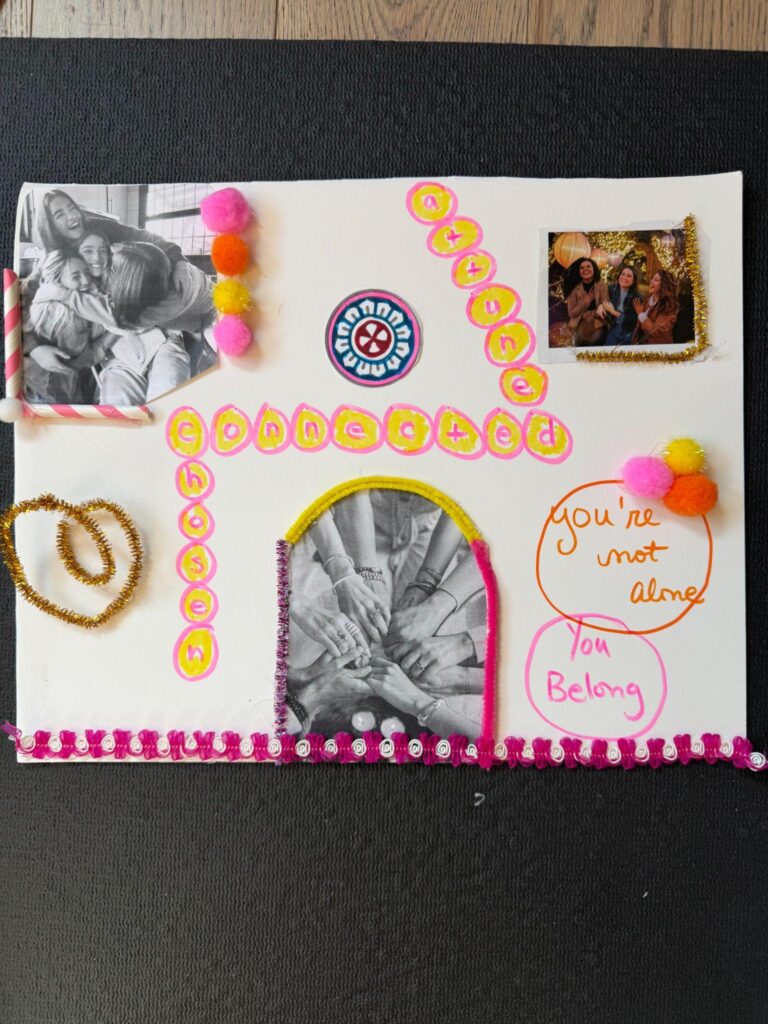
For the Part That Longs for Connection (and Gets in Its Own Way)
Many of us are looking for deeper relationships, more meaningful connections. But we have a part that gets in its own way by overthinking or second-guessing. We become a little too aware, or a little too critical.
This part scans for rejection: Who reached out? Who didn’t? Where do I stand?
What it needs isn’t more analysis. It needs something steadier.
We practice being attuned with yourself:
- “You matter.”
- “You belong, even when others are quiet.”
- “Your value isn’t defined by who shows up or doesn’t.”
For the Overthinker: The Part That Tries to Figure Everything Out
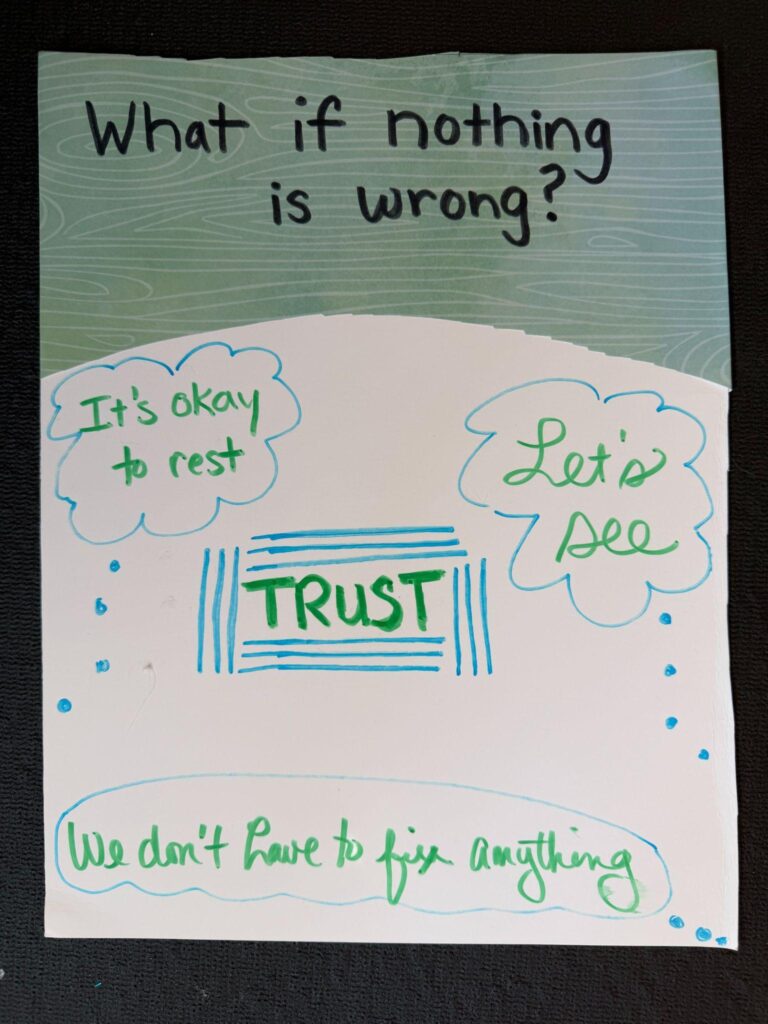
Many people spend a lot of time wondering why things are the way they are.
There is often a highly intelligent part of us that scans for problems and tries to make sense of everything. While thoughtful, it can become overactive and produce significant anxiety. It asks: What’s wrong? What am I missing?
In Internal Family Systems Therapy, we learn to give this part permission to rest. The message shifts to:
- “What if nothing is wrong?”
- “Noticing is enough.”
- “We don’t have to fix anything right now.”
If you want to try this yourself, start simple. Choose one part that shows up often in your own life. And you might ask: what might it need to hear from me today?
Create a small collage, write a note, or even set a phone wallpaper with the messages that part needs most.
And Then There’s Something Deeper
Beyond these parts, there’s also a steadier place. It isn’t something you have to create—but something you can come back to.
It’s already there.
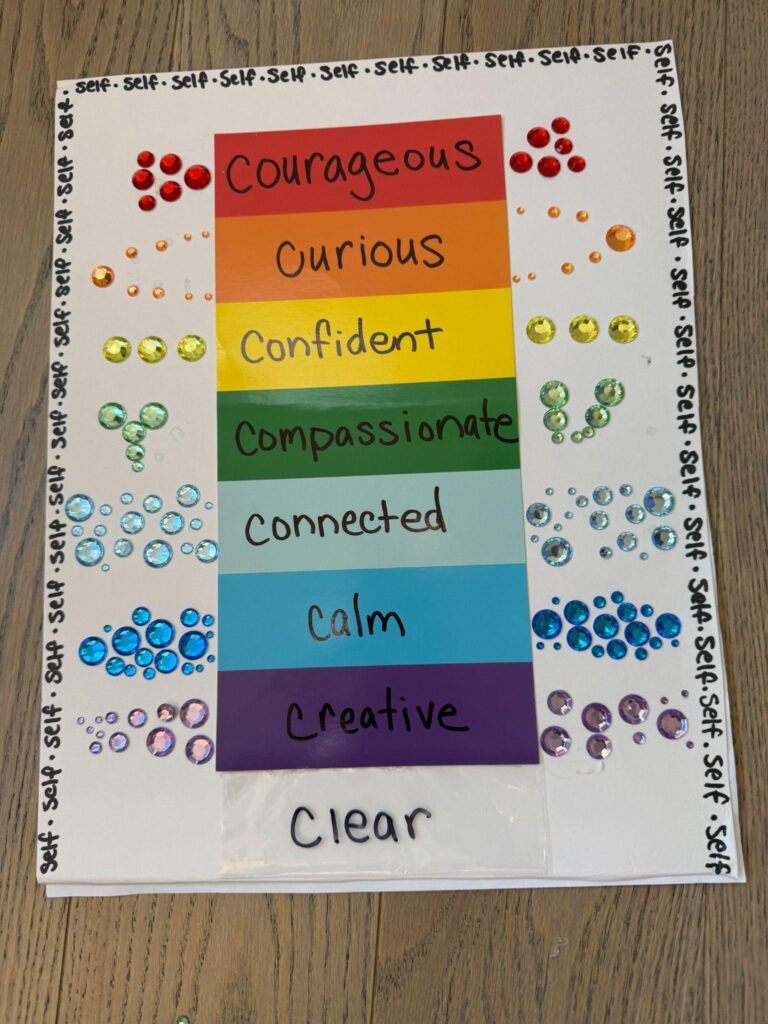
As earlier mentioned, that place is your core Self—the part of you that can be calm, curious, compassionate, and grounded.
You don’t have to “build” that version of yourself; it’s already there, underneath the noise of the parts. We’re all born with it.
And as we create a little more space from our parts, that part of us naturally begins to lead.
It’s not something you have to become—it’s something you return to.
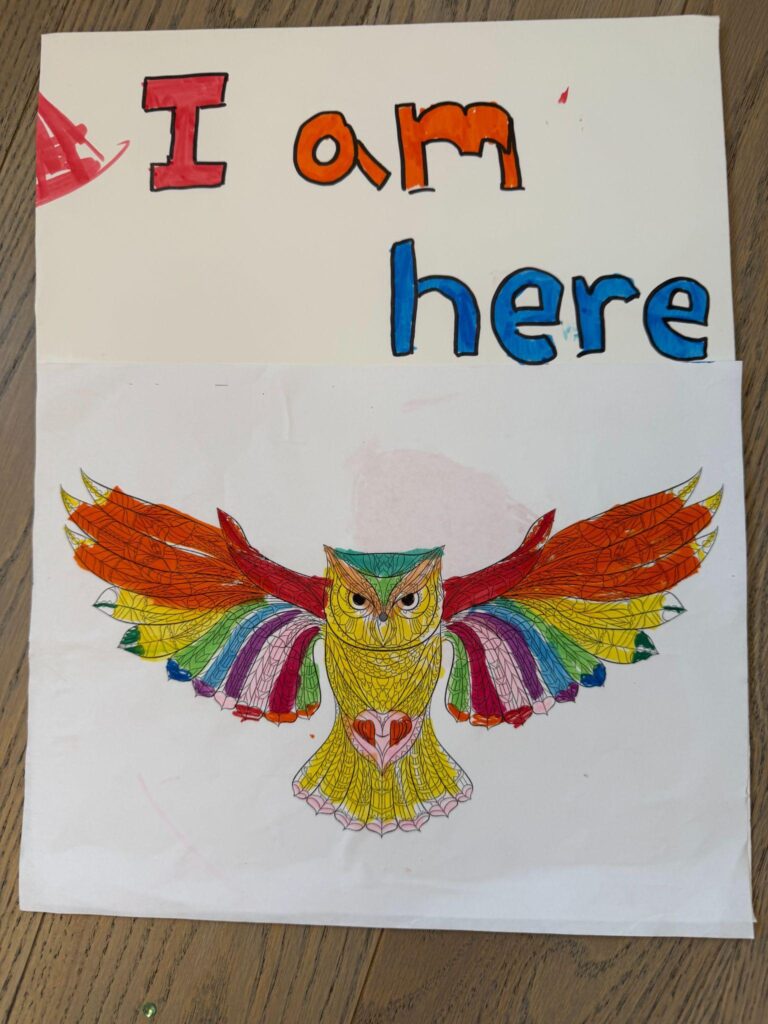
This represents a fundamental shift: growth becomes less about forcing change and more about building a kinder, more trusting relationship with yourself. When your parts feel heard and cared for, they naturally relax their extreme roles. Your true Self emerges.
A Different Kind of Growth: Is Internal Family Systems Therapy Right for You?
What I’ve noticed is that something shifts when I stop trying to change the different parts and start relating to them separately.
There’s less urgency. Less internal tension. More space.
Growth starts to feel less like pushing and more like listening.
This is the kind of work I often explore in therapy and coaching with adults navigating anxiety, relationships, and self-trust.
I ask them these questions:
- Do you feel like different sides of you are constantly arguing?
- Do you criticize yourself harshly for not being “over” something from the past?
- Do you swing between over-functioning and numbing out?
- Do you feel worthless or “too much” in relationships?
- Do you recognize patterns from your family showing up in your adult life?
If any of these resonate with you, IFS offers a compassionate framework that doesn’t see you as broken. Instead, it recognizes that your parts developed for good reasons and can learn new ways of relating once they feel safe.
That said, IFS may not be the best stand-alone approach for everyone. Active psychosis, severe substance use requiring medical support, or situations involving self-harm or suicidal fantasies may need additional interventions. Part of the intake process involves exploring together whether IFS is a good fit for you.
What to Expect When You Start IFS-Informed Therapy at Be Calm Therapy
The first few sessions will focus on getting to know each other. You’ll complete intake forms, share your story at whatever pace feels comfortable, and identify the main concerns bringing you to therapy.
Early on, we’ll gently map your internal system together. This means getting curious about your common protectors: the perfectionist, the people-pleaser, the angry part, the inner critic. We won’t try to change them immediately. First, we build understanding and trust.
Sessions often include:
| Element | Purpose |
| Brief grounding or breathwork | Helps your nervous system settle and makes internal work possible |
| Guided inner attention | Noticing where parts show up in body and mind |
| Dialogue with parts | Understanding their fears and protective intentions |
| Integration time | Processing what emerged and planning gentle next steps |
Therapy sessions typically run 50 minutes and happen weekly or bi-weekly, depending on what works for you.
I also offer holistic life coaching for those wanting IFS-informed support outside a clinical therapy context—particularly helpful for professionals navigating transitions or wanting to deepen their relationship with themselves.
Taking the Next Step
It takes courage to consider therapy—to acknowledge that something isn’t working and that you might need support. Internal family systems therapy can help you move from feeling stuck in an inner maze to feeling more connected, calm, and self-led in your daily life.
If you’re ready to explore what IFS-informed therapy or life coaching could look like for you, I’d love to connect. You can schedule a free consultation or reach out through the contact form on the website.
You don’t have to sort through all your parts alone. Compassionate support is available—and designed to move at exactly your pace.