
Why Do I Replay Conversations in My Head?

If you have ever quietly asked yourself, Why do I replay conversations in my head, you are far from alone. Many people leave a dinner, a work meeting, or casual small talk feeling fine, only to notice later that their mind keeps circling back. Hours later, the words return. The looks return. The pauses return.
This article explores why this happens, what it says about your inner world, and how to respond with care rather than self-criticism.
If you’re a creative person, this experience may feel even stronger. You get home from a school event, a family gathering, or a night out. Instead of resting, your brain keeps going.
Did I talk too much?
Why did I tell that story?
Did she give me a weird look?
Was that joke actually awkward?
Did I say the wrong thing when there was a right thing I could have said instead?
This pattern of replaying conversations can feel draining. By the end of the day, you may feel exposed or uneasy, even when no one said anything negative. I call this experience the creative social hangover. It is common, human, and deeply misunderstood.
The good news is simple. This habit does not mean you failed socially. It does not mean you are awkward or broken. It often means your mind is wired to notice, reflect, and care.
What It Really Means to Replay Conversations
Replaying past conversations is a form of mental replay. Pay attention to your self-talk, as your internal voice often judges, corrects, or scolds during these loops. Research shows this process helped human beings learn from social interactions long before modern life existed.
Your brain keeps scanning because it believes it is helping you survive. It wants to prepare you for next time. It wants to make sure you say the right thing, choose the right tone, and protect yourself from rejection.
This is why people replay conversations after social situations that mattered to them. The more important the connection, the stronger the replay.
Over time, this can turn into a replay loop. The mind goes back again and again, even when there is nothing new to learn.
Creativity, Sensitivity, and the Inner World
Creative minds do not think in straight lines. They imagine scenes. They sense energy. They read between the lines. During social interactions, they notice tone shifts, pauses, subtle facial expressions, and body language, which can stay in your awareness long after the event ends.
This sensitivity is a good thing. It supports empathy, storytelling, and emotional depth. But after real-life events end, that same sensitivity can turn inward.
Instead of staying in the present moment, the mind begins replaying situations in your head. You may replay conversations from hours ago or replay every conversation from the entire night.
This does not mean you did something wrong. It means your awareness stayed open longer than your body could comfortably hold.
Anxiety, Rumination, and Emotional Safety
For many people, replaying conversations is connected to social anxiety. For others, it shows up during periods of high stress or emotional overload. In some cases, it overlaps with social anxiety disorder, where fear of judgment becomes a constant background noise.
There are also moments when this pattern is linked to mental health conditions. A mental health disorder, such as obsessive-compulsive disorder, may involve intrusive thoughts that repeat without relief. A symptom of obsessive-compulsive disorder can include getting stuck on words, images, or moments that feel impossible to shut off.
Other people notice this habit after trauma. Post-traumatic stress disorder can cause the brain to replay past events as a way to stay alert.
This does not mean everyone who replays conversations has a mental illness. Often, this pattern is a coping mechanism that once helped you feel safe.
What’s Actually Happening Inside You (IFS Lens)
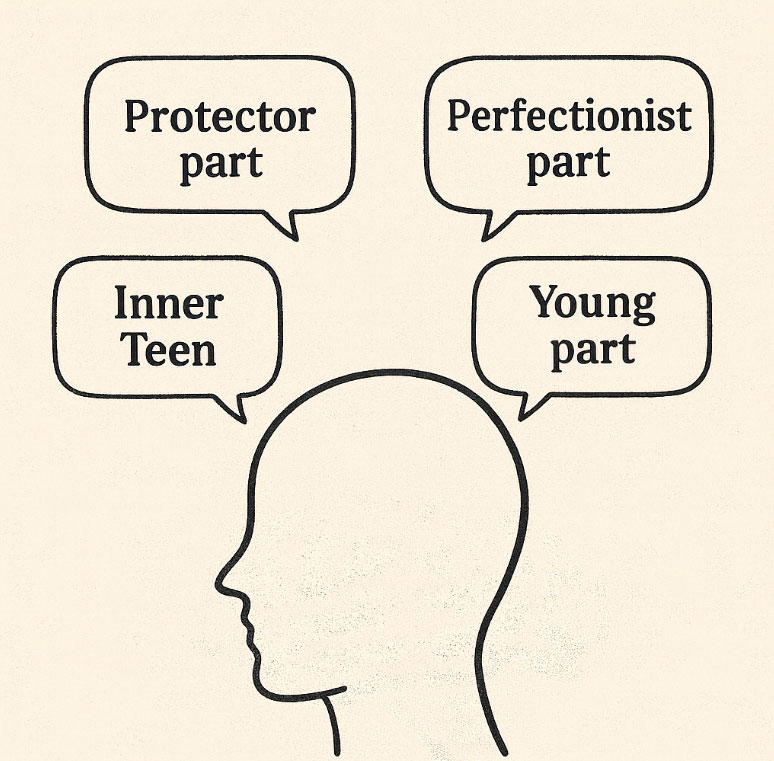
From an Internal Family Systems lens, social hangovers happen because different parts of you have strong opinions about how you should show up in a group.
- A Protector part steps in to make sure you were not “too much.” It scans conversations for risk.
- A Perfectionist part wants every interaction to feel smooth and clean. It reviews moments where things felt off.
- An Inner Teen part may fear exclusion or embarrassment. It remembers what it felt like to be left out before.
- A tender younger part simply wants to feel liked, safe, and welcome.
None of these parts is trying to punish you. They are not attacking you. They are trying to protect you from an old fear of not belonging.
When you replay interactions, these parts are really asking simple questions:
“Are we okay?” “Did we mess anything up?” “Are we still wanted?”
Seen this way, replaying conversations is not neurotic. It is relational. It reflects how deeply you care about connection.
Why It Is Hard to Let Go
Letting go of past conversations feels difficult because the brain wants certainty. It wants to know that everything is okay.
But social life is rarely clear. No one gives a final score. No one hands out feedback forms.
The truth is simple. No one is replaying your words the way you are.
Yet the mind keeps spinning. These mental loops can follow you into sleep, into quiet moments, and into daily life. Over a long time, this can affect confidence and quality of life.
Is This Normal or a Sign of Something More?
Replaying conversations is common. It becomes a concern when it lasts an extended period, causes distress, or interferes with work, rest, or relationships.
If the thought cycle feels uncontrollable or paired with racing thoughts, or if you feel stuck in a cycle of rumination, it may help to speak with a mental health professional. A Licensed Therapist can help you understand whether this habit connects to anxiety, trauma, or other mental health conditions.
Seeking support is not a failure. It is a practical and caring step.
How to Gently Interrupt the Post-Social Spiral

Here are practices I give my own clients. They are simple, doable, and mind-body oriented. Techniques like mindfulness meditation can help you notice thoughts without chasing them, keeping you in the present moment.
1. Name what’s happening
Say it plainly: “I’m having a creative social hangover.”
Naming the experience matters. It reduces shame and brings compassion into the moment. Instead of assuming something is wrong with you, you recognize a familiar pattern. This alone can soften the intensity of the spiral.
2. Find the part that’s scared and speak to it
There is often a tender part of you that feels exposed after social time. Speak to it gently.
Try saying: “Sweetheart, we’re okay. Nothing dangerous happened. You don’t have to scan anymore.”
Your system responds to warmth, not logic. You are offering reassurance, not correction.
3. Give your nervous system a landing place
Instead of scrolling or rehashing the night, bring your attention to the body.
A hot shower. Legs up the wall. A hand on your heart or belly. A slow exhale through the mouth. A few minutes of stretching.
Creatives regulate through the body more than through the mind.
4. Remember this grounding truth
People were not scrutinizing you the way you are scrutinizing yourself. Most people are focused on their own interactions. This truth is not dismissive. It is freeing.
5. Plan a buffer ritual
Create a gentle transition after social time. Low lights. Comfortable clothes. Tea. A few breaths. Anything that signals: We’re done performing now. We’re home.
Practical Coping Tools for Everyday Moments
Helpful coping tools do not need to be complicated.
- A warm shower after a social event
- Stretching or slow walking
- Writing thoughts down, then closing the notebook
- Turning lights low at night
Spending time in calming routines signals safety to the brain.
When the Brain Keeps Going Anyway
Sometimes the brain keeps replaying because it believes learning is still happening. You can respond with kindness.
Say, “I have done enough thinking for today.”
This helps close the replay loop.
Looking Ahead Without Fear
Many people worry about future conversations. They imagine what they should say or how they should act.
Try to remember this. Connection is built through presence, not perfection.
Small talk does not require brilliance. A work meeting does not require flawless delivery. Showing up as you are is often enough.
Understanding the Root Causes
The root causes of replaying conversations often include sensitivity, past experiences, and fear of social rejection.
Personality traits such as empathy and reflection can increase this habit. Your anxiety level may rise in unfamiliar settings.
None of this makes you weak. It makes you aware.
Choosing a Kinder Path Forward
The best way to work with this pattern is not to fight it, but to guide it. Choose the right tool for the moment.
Sometimes that tool is rest. Sometimes it is movement. Sometimes it is talking with someone you trust.
In the long run, compassion toward yourself reshapes the thinking process more than criticism ever could.
Final Reflection
If you often wonder why you keep replaying conversations in your head, know this. You are responding to connection, not failure.
This habit is a type of rumination rooted in care. With patience and support, mental loops can soften.
At the end of the day, you are allowed to be imperfect.
You are allowed to be human.
And you are allowed to rest your mind.
If you want personalized guidance or someone to help you navigate these replay loops, get in touch with me and book a session to explore tools, coping strategies, and ways to calm your mind so you feel more present in social situations.